



Patients may choose to undergo upper and lower eyelid surgery for a variety of aesthetic and medical reasons. Some of the conditions that Blepharoplasty can help address are:
This can be performed on the upper eyelids, lower eyelids, or both, depending on the patient's needs.
Eyelid Surgery Procedures: A Step-by-Step Guide
The process begins with a detailed consultation with one of our experienced surgeons. The surgeon will review the patient’s medical history, discusses any medications or conditions that might affect the surgery, and evaluates the patient's eyelid anatomy and skin quality.
Our surgeon then assesses the degree of eyelid drooping, puffiness, excess skin, and muscle laxity to determine the most appropriate surgical approach.
The patient and surgeon discuss the desired outcomes, surgical techniques, potential risks, and recovery process.
Preoperative instructions will be provided, which may include avoiding certain medications or supplements, fasting, putting a stop to habits such as smoking or drinking, to reduce the risk of bleeding and promote healing.
On the day of surgery, the patient is taken to the operating room or surgical suite. Blepharoplasty is typically performed under local anaesthesia with sedation, meaning the patient is awake but relaxed and pain-free.
In some cases, particularly when combined with other facial procedures, general anaesthesia may be used to ensure the patient is fully asleep during the surgery.
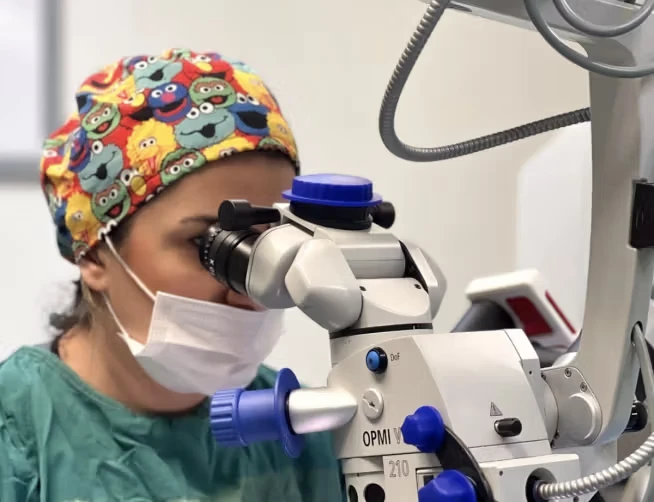
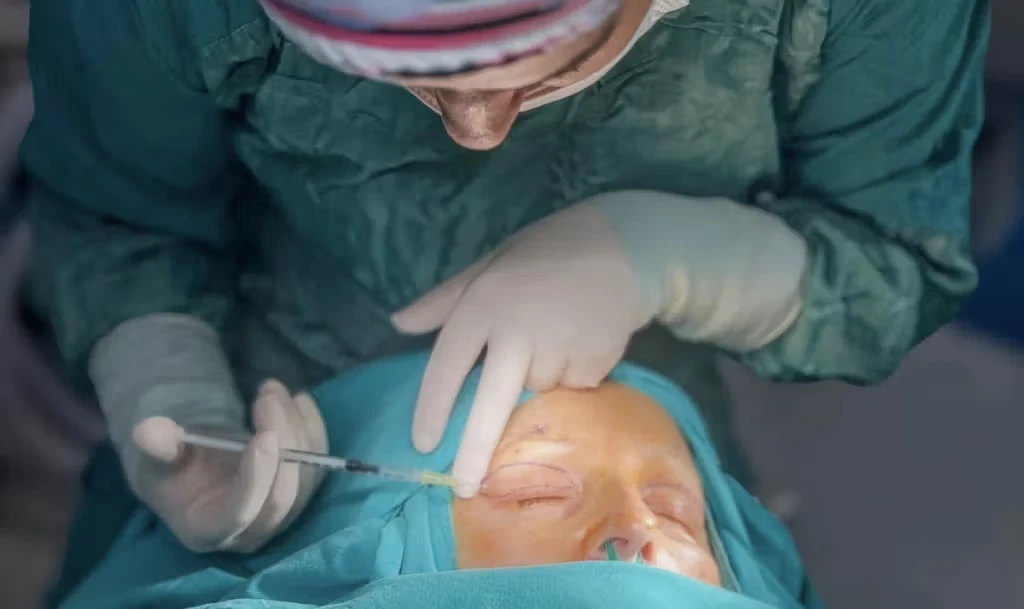
Before beginning the procedure, the surgeon carefully marks the upper and/or lower eyelids to guide the placement of incisions and the amount of skin, fat, or muscle to be removed. These markings help ensure symmetry and optimal results.
The surgeon makes an incision along the natural crease of the upper eyelid, which allows the scar to be well hidden. The incision typically extends slightly beyond the outer corner of the eye to address any excess skin folds.
Through this incision, the surgeon removes or repositions excess skin, fat, and sometimes a small amount of muscle to create a smoother and more defined eyelid contour. The amount of tissue removed depends on the patient’s anatomy and desired outcome.
The incisions are then closed with fine sutures or surgical glue to minimise scarring. The sutures may be removed after about 5 to 7 days, depending on the surgeon's preference and the patient's healing.
The surgeon makes an incision just below the lower lash line (subciliary approach) or on the inside of the lower eyelid (transconjunctival approach). The choice of technique depends on the patient's anatomy and the extent of correction needed.
Through the chosen incision, the surgeon removes or repositions excess fat, tightens underlying muscles, and trims any loose skin to smooth out the under-eye area and reduce puffiness.
The incisions are closed with dissolvable sutures (for the transconjunctival approach) or fine sutures (for the subciliary approach), which are usually removed after about 5 to 7 days.
After removing excess tissue and fat, the skin is gently re-draped over the newly contoured area. The surgeon ensures that the eyes appear symmetrical and natural-looking. Adjustments may be made to ensure both sides match and achieve the desired aesthetic results.
Once the incisions are closed, small sterile dressings may be applied to protect the incision sites. Cold compresses or cooling eye pads are placed over the eyes to minimise swelling and bruising.
An ophthalmic ointment may be applied to keep the eyes lubricated and prevent dryness during the initial healing phase.
After surgery, the patient is taken to a recovery area where they are monitored until fully awake and stable. Blepharoplasty is typically an outpatient procedure, allowing patients to go home the same day.
Patients are provided with detailed postoperative care instructions, including how to clean the incision sites, apply ointments, and use cold compresses to reduce swelling and bruising.
Pain is usually mild to moderate and can be managed with prescribed pain medications and over-the-counter pain relievers. Patients are advised to keep their heads elevated, avoid strenuous activities, and refrain from rubbing their eyes.
Follow-up consultations are scheduled within the first week after surgery to monitor healing, remove sutures (if non-dissolvable), and assess for any complications such as infection, excessive swelling, or bleeding.
Additional follow-up consultations may be scheduled over the next few weeks to ensure optimal healing and results.
Like any surgical procedure, Blepharoplasty carries potential risks and complications, such as infection, bleeding, scarring, dry eyes, temporary or permanent changes in eyelid sensation, asymmetry, and, rarely, ectropion (outward turning of the eyelid) or entropion (inward turning of the eyelid). However, most complications are rare and can be minimised by following the surgeon's postoperative care instructions carefully.

We are proud to offer modern facilities which are continually updated, equipped with the latest medical technologies and practices. This commitment to innovation allows us to provide you with the highest standard of care possible.

Please consult your doctor on when you can resume normal activities, as this varies based on the severity of your surgery. For Aesthetic Surgery, training and sports should be avoided for at least eight weeks post-surgery, or as specifically advised for your case. If you have any concerns, please do not hesitate to contact Vatan Healthcare.

In case of any issues when you are back in your home country, you can reach us using the contact numbers provided. The actions we take in response to complications depend on the specific issue.
Once this issue has been raised, we will usually arrange a follow-up consultation with the patient, either via phone or video call, to speak with the surgeon. In some cases, the surgeon may request additional photos of the complication to assess it more thoroughly. Based on the surgeon's evaluation, the patient may receive updated care instructions, additional medication recommendations, be directed to a relevant healthcare facility, or be invited back to our hospital for further treatment if necessary.
Additionally, we issue complication insurance to offer added protection and advantages for our patients, and we stand firmly behind the care we provide. Reach out to us for more information about this.


For Aesthetic Surgery, swelling can last 6 to 12 months. Some patients experience minimal swelling within the first six months, while for others, it may take up to 18 months.
 Whatsapp
 Phone
Phone