


Coronary CT Angiography (Virtual Angiography)
Coronary CT angiography, also known as “virtual angiography,” is a modern imaging method used to examine the coronary arteries. The examination can assess the condition of the blood vessels, the presence of calcium deposits and atherosclerotic changes.
What Is Virtual Angiography?
Virtual angiography is a non-invasive imaging method in which the coronary arteries are visualised using computed tomography (CT) and a contrast agent.
Unlike conventional coronary angiography, the procedure does not require a catheter to be inserted directly into the coronary arteries. Images are obtained using CT, allowing detailed assessment of the anatomy of the coronary vessels.
How Is Coronary CT Angiography Performed?
Before the examination, the patient receives the necessary information and the medical team assesses whether there are any contraindications to the procedure. In certain cases, kidney function may also be assessed through a creatinine test.
ECG electrodes may be placed on the patient's chest to monitor the heart rate. If necessary, the doctor may determine whether medication is required to regulate the heart rate.
After intravenous access is established, a contrast agent is administered to help visualise the coronary arteries.
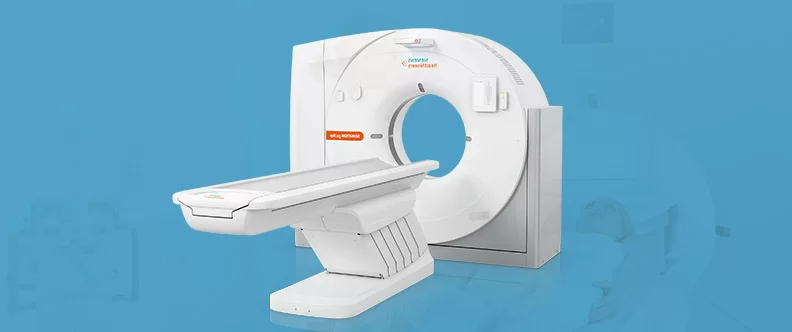
During the CT examination, the patient lies on the scanner and receives brief instructions to hold their breath. This helps produce clearer images and minimise motion artefacts.
The images obtained can be processed using various reconstruction techniques, including three-dimensional images of the coronary arteries.
When May Coronary CT Angiography Be Recommended?
The examination may be recommended in cases of certain symptoms, risk factors or suspected coronary artery disease. Possible reasons for requesting the examination include:
The need for coronary CT angiography is determined individually by a doctor.
What Is the Difference Between Virtual and Invasive Angiography?
The two methods differ in how they are performed and in their applications.
Virtual Angiography – Coronary CT Angiography
Conventional Coronary Angiography
The choice of the appropriate method depends on the patient's specific condition, symptoms, and the doctor's assessment.
What Are the Possible Risks and How Should the Patient Prepare?
Coronary CT angiography uses X-rays and, in most cases, a contrast agent. Before the examination, the medical team assesses the individual risks and determines whether any preliminary tests are required.
Particular attention may be paid to:
Preparation before the examination is determined according to the specific protocol and the patient's individual condition. Medications should not be stopped or food and fluid intake changed without instructions from a medical professional.
What Do the Results Show?
The images obtained and the examination results are evaluated by a specialist. They are interpreted together with the patient's symptoms, medical history and the results of other examinations.
Depending on the findings, the doctor may recommend additional tests, follow-up monitoring or appropriate treatment.
Important
Coronary CT angiography is not suitable for every patient. The need for the examination, preparation and specific protocol are determined individually by a doctor.




 Whatsapp
 Phone
Phone