


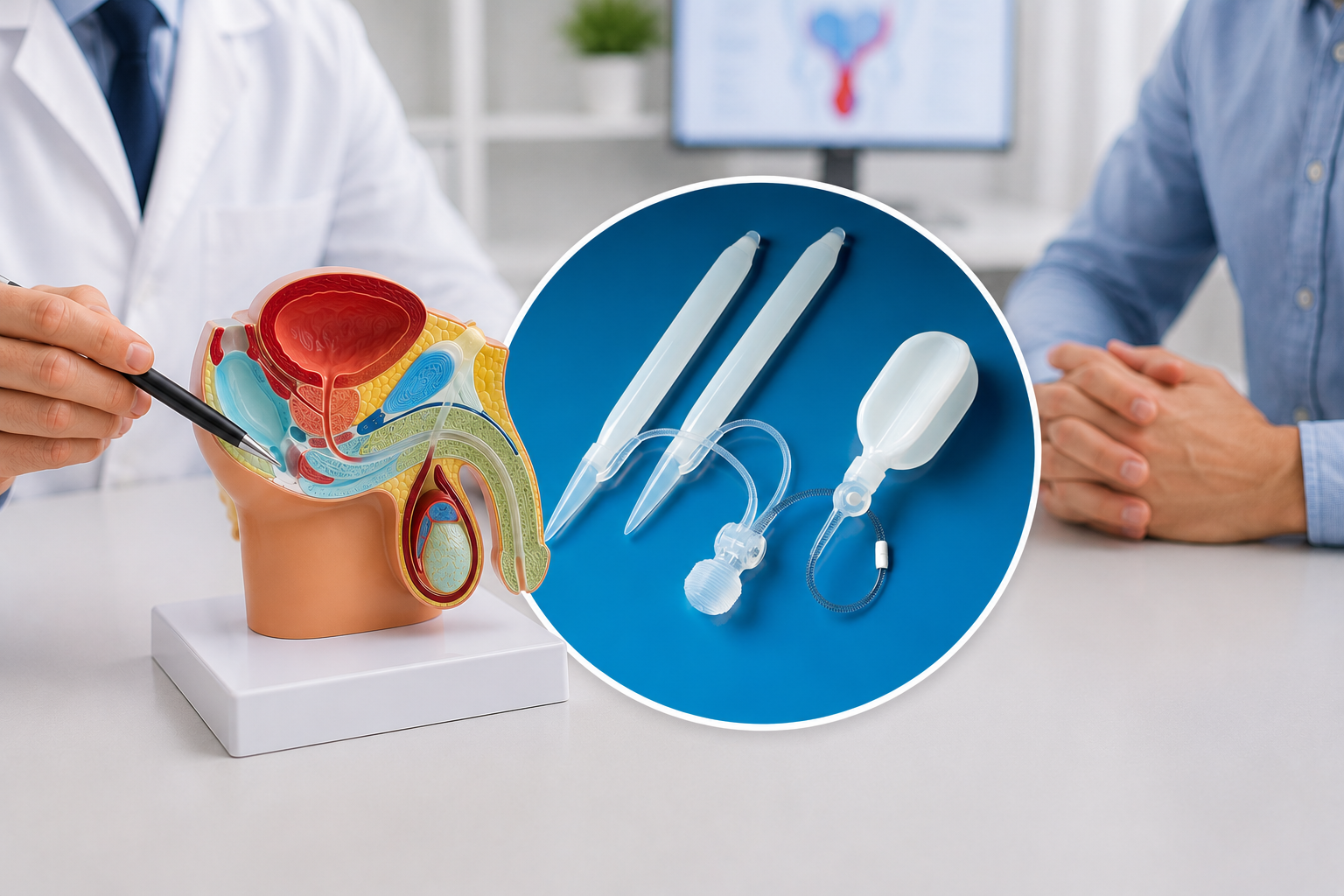
Erectile dysfunction (ED) is a common condition affecting men and is defined as the persistent or recurrent inability to achieve or maintain an erection firm enough for sexual intercourse. It can occur at any age, although its prevalence increases with age.
Modern urology offers a range of treatments for erectile dysfunction. When medication and other non-surgical approaches do not provide a satisfactory outcome, penile prosthesis implantation may be an effective treatment option for appropriately selected patients.
An erection is a complex physiological process in which blood fills the two erectile chambers of the penis, known as the corpora cavernosa. Normal erectile function depends on the coordinated interaction of the vascular and nervous systems, hormonal balance and psychological well-being.
Common causes and risk factors include:
· diabetes, high blood pressure and cardiovascular disease;
· atherosclerosis and other circulatory disorders;
· smoking and excess body weight;
· hormonal disorders;
· diseases or injuries affecting the nervous system or spinal cord;
· pelvic surgery or radiotherapy;
· a history of radical prostatectomy;
· Peyronie’s disease and other structural abnormalities of the penis;
· certain medications; and
· stress, anxiety, depression and relationship difficulties.
In many patients, erectile dysfunction has more than one cause and involves a combination of physical and psychological factors.
Treatment is tailored to the individual and depends on the underlying cause, the severity of symptoms, the patient’s general health and personal preferences.
Possible approaches include:
· lifestyle changes and effective management of underlying health conditions;
· stopping smoking and reducing excess body weight;
· phosphodiesterase type 5 (PDE5) inhibitors;
· vacuum erection devices;
· intracavernosal injections;
· intraurethral medication;
· psychosexual counselling or therapy;
· low-intensity shockwave therapy in selected patients with vasculogenic erectile dysfunction; and
· surgical implantation of a penile prosthesis.
Platelet-rich plasma (PRP), stem cell therapy and certain other regenerative approaches are still under investigation. At present, the available evidence is not sufficient for these methods to be regarded as a standard treatment for all patients.
A penile prosthesis is a surgical treatment for erectile dysfunction and is generally considered when other treatment options have not produced the desired result. The decision is made after a detailed urological assessment and a discussion of the patient’s expectations, general health and individual needs.
The two main types are one-piece malleable (semi-rigid) implants and three-piece inflatable implants. The most appropriate option is selected individually, taking into account the patient’s medical condition, anatomy, manual dexterity, lifestyle and expectations.
Following surgery, a short hospital stay and medical follow-up are usually required. Recovery varies from patient to patient. Careful adherence to the treating physician’s instructions, including wound care, activity restrictions and the recommended timing for resuming sexual activity, is important for a safe recovery.
Modern urology provides several treatment options for erectile dysfunction. Penile prosthesis implantation may offer an effective surgical solution for patients who have not achieved a satisfactory response to medication or other non-surgical treatments.
The decision to proceed with surgery should be made after a comprehensive urological examination, an assessment of the patient’s general health and an open discussion of the expected benefits, limitations, risks and available alternatives. The type of implant and the overall treatment plan are determined individually for each patient.
This article is intended for general information only and does not replace a medical examination, diagnosis or personalised advice from a urologist.




 Whatsapp
 Phone
Phone